First Ascent: Finding Quiet Above the Noise while Reaching for New Connections
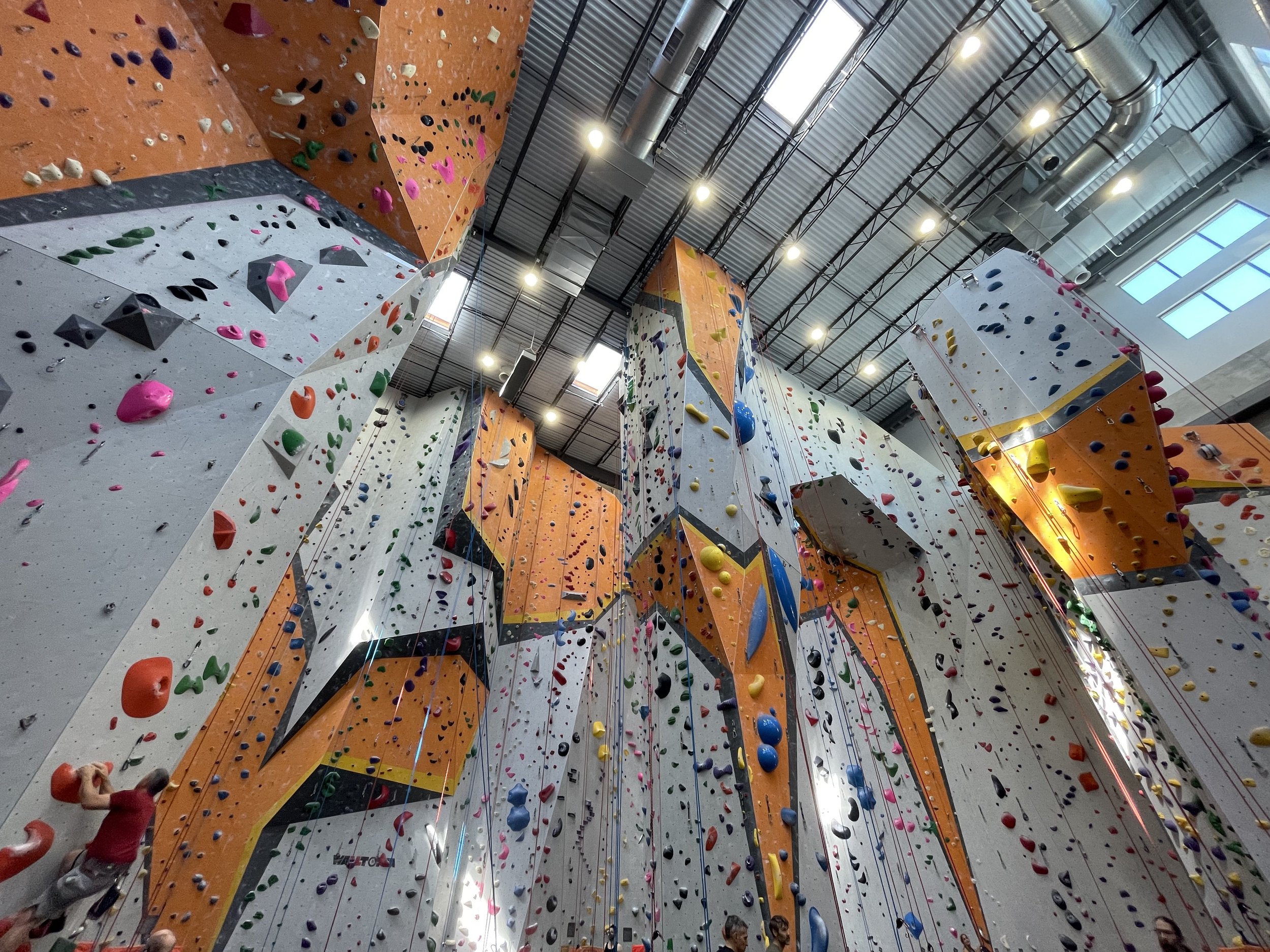
When I started climbing for the first time, the towering walls of the gym seemed to loom over me like something out of a cartoon short where the character starts to realize just how high they need to go. The last time I climbed was when I was 9 years old–and youthful, ignorant bliss clouded my fearless eyes. Confronting the walls again this time proved to be a bit more challenging. Now I was 23, in the midst of a demanding Master’s program, and looking to reconnect with an old hobby to find a way through this challenging curriculum.
Walking into a gym can be intimidating if you haven’t felt the sting of its harsh, fluorescent lights since high school. Thankfully, that wasn’t the case at First Ascent. With plenty of natural light and ceilings accommodating walls up to 60 feet, I was entering an entirely new environment. After becoming freshly certified in top roping, a course offered for free to members of the gym, I scoured the walls at the Avondale gym to experiment with the climbing lingo I was actively learning.
“Want to go flash some problems and project that new route, fellow climber?”* While questioning how I’d interact with other gymgoers, I quickly appreciated the social challenge ahead of me. For months, I’d been drowning in textbooks and Zoom classes for school. Luckily for me, a board was tacked to the gym’s wall, where friendly staff invited me to sign up for belay partners.
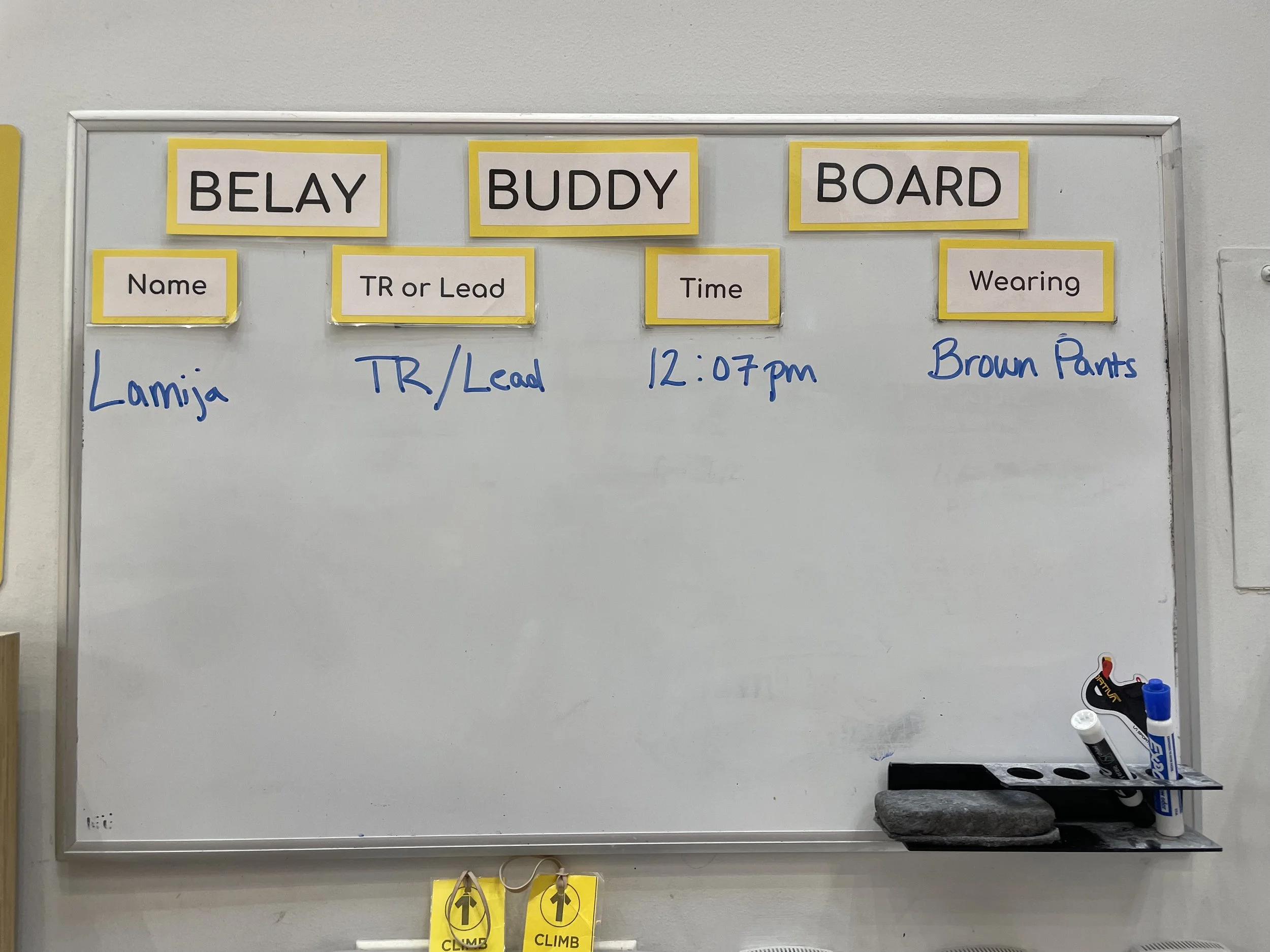
A photo of the belay buddy board inside the gym with my information
Finding Your Village
Around this time, I had been adjusting to life in Chicago on the tail end of the COVID era, as well as a new job upon completing my undergraduate degree. Many of my friends lived far from the city, which made it difficult to foster local community ties. I started to consider different ways to get connected, and ultimately found an inclusive community ready to help “show me the ropes.”
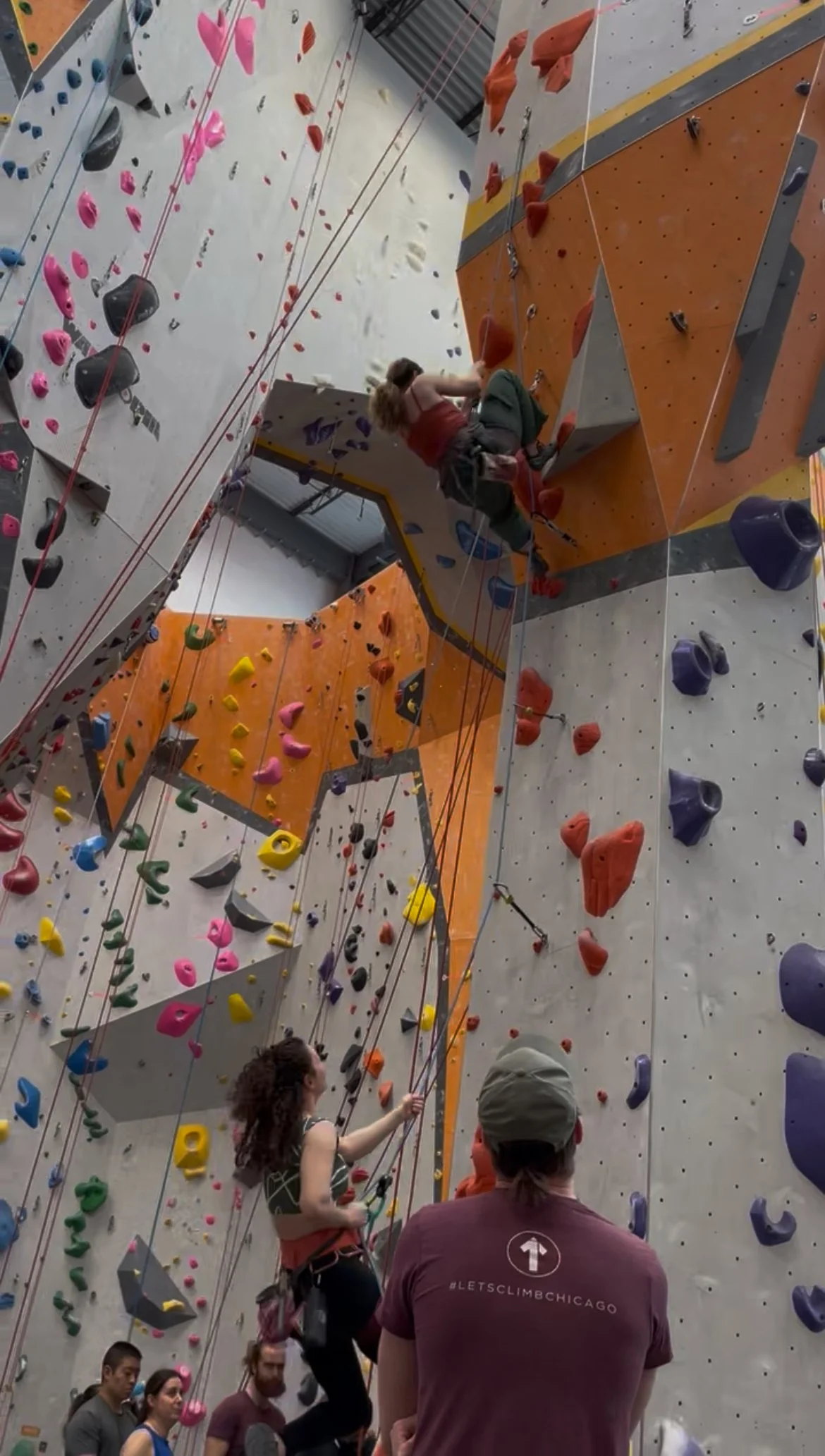
A photo of me beginning my lead climbing journey.
I spoke with Dylan Waickman, manager of the First Ascent gym in the Avondale neighborhood of Chicago, about how the gym fosters community beyond fitness training and why he thinks gyms are increasingly serving as important “third spaces” in people’s lives.
“Everyone is always looking for their village, and a village is never going to look one way,” says Waickman. Representing a variety of skills, ages, and experiences is a priority for the gym. They have a whole team on call to preserve a supportive environment within the gym. The management team works alongside hospitality staff and instructors to ensure a seamless gym experience.
It’s no wonder that the climbing community is so inclusive, given the communal nature of the sport. As Waickman puts it, “rock climbing is a sport that requires you to interact with other people…a social experience embedded inside of an athletic experience.” Whether it’s help with belay on a route, or asking for beta on a problem, there is an inherent social component to climbing**.
Additionally, the gym works to foster a welcoming environment beyond just skill and age gaps. To intentionally build those relationships, the gym partners with different community organizers who run affinity groups. Examples of affinity groups include BIPOC climbers, queer climbers, among others. By creating a welcoming space for climbers through encouraging representation and inclusivity, the gym becomes a tapestry of diversity.
Overarching Themes
Whether you’re looking to try out a new hobby, find your people, or overcome a latent fear of heights, First Ascent has created a community that prides itself on building trust and connections. Since starting to climb in 2023, I’ve connected with countless other climbers and (try to) go to the gym every week with a group of girls we’ve appropriately named ‘belay princesses’. I’ve learned to lead, started to climb outdoors, and even climbed internationally on my last trip outside the U.S. The impact of third spaces on my life has been profound.
Third spaces can help make a big move less scary, a life transition less challenging, and joining a new community less intimidating. If you’re thinking of branching out, why not consider a climbing gym as your third space?
* ‘Problem’ refers to a climbing route or sequence of moves.
** ‘Beta’ refers to the series of individual moves that completes a climb.
——————————————
