Colombian Culture: A Cyclist Haven?
My time in Yopal — the Casanare department of Colombia
I recently spent the last two and a half weeks in Colombia volunteering at a language institute in the capital of its Casanare department. In exchange for a modest room and a daily lunch, I taught English to students while relying on my painfully broken Spanish. I walked daily around the city, equally an observer and the observed. It was safe to assume that Yopal did not frequently receive solo-traveling American women strolling about. Between the rolling plains, delicious meat, and meandering herds of livestock, I found an unexpected yet vibrant cycling scene throughout the region.
When you search “What is Colombia known for?”, you’ll likely find a variety of responses. Geopolitical conflict and crime may first appear at the top of your browser and your mind. Though these are certainly major topics of conversation, like most places, a little awareness and good judgement go a long way. I’m not here to tell you it’s perfect—no place is. Rather, I hope to share the distinct lifestyle I observed and was able to experience for a brief time.
As I walked the uneven streets with my limited high school Spanish in tow, I found a region with immense pride and passion for sharing Colombia’s story. While there, I smoked cigarettes with matriarchs, discussed politics (and criticisms) of each other’s presidents, and hiked along the eastern plains of the Andes—all in no distinct order.
Stepping slightly outside of the main city area, seas of cyclists appeared seemingly out of thin air. All adorned in brightly colored racing gear and coming in waves, it was a sight befitting the Tour de France. Though I’m not sure the landscapes of the Tour de France could be categorized as tropically lush while still being able to ride alongside horses and cattle.
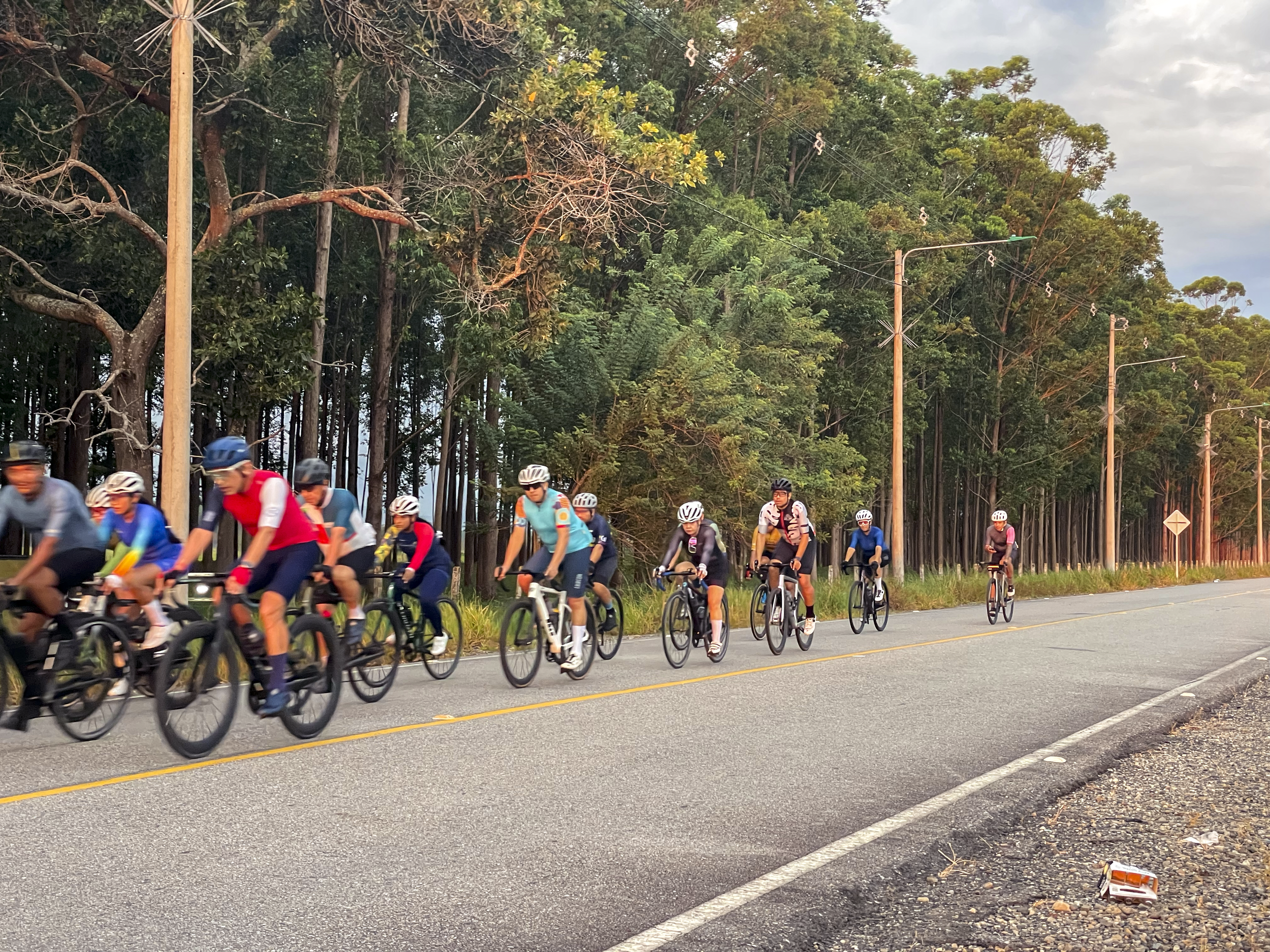
A group of cyclists pass in their brightly adorned gear
I was surprised to see just how many cycling cafes lined the roads here and shocked to realize the hordes of cyclists that race by on any given day. Many cyclists will make a rest stop at a cafe for a tinto (a traditional black-coffee-style brew) in the midst or at the end of their rides. Optionally sweetened with panela (though I’m not sure why you would pass on this—take it from Martha Stewart), this smooth beverage is the perfect accompaniment to an early morning sunrise.
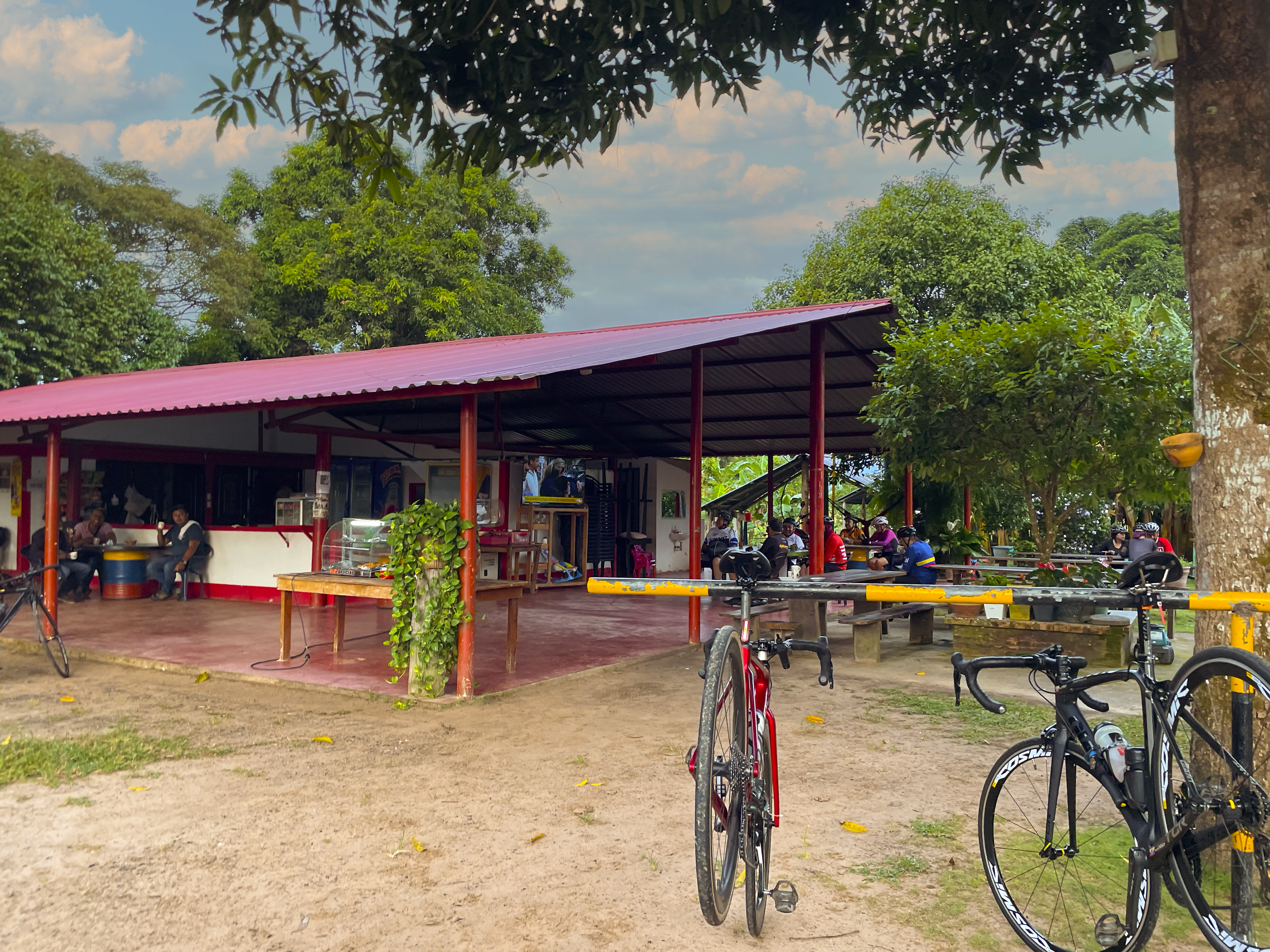
One of many bike cafes
Strewn along public roads and city outskirts are rows of community-driven spaces where the locals all seem to know each other and bond over the cups of coffee they share. I asked my host while I was there if cycling was popular amongst people in Yopal, to which I received a resounding yes. [Yopal hosts multiple cycling events throughout the year.] A great resource on cycling races in Colombia can be found on the Federacion Colombiana de Ciclismo website. Calendars, news releases, and information are frequently updated on the site.
There are many posted lists of events and resources that exist for those interested in staying up-to-date on racing in Colombia. Otherwise, word of mouth or reaching out to groups on Facebook or Instagram is a reliable way to find a local group to cycle with.
Crossing paths with a community that took its love for coffee as seriously as its passion for sports, I found third spaces scattered across the area that welded the two together, creating a distinct fusion. Though I’m more of a commuter cyclist myself, I felt inspired to start cycling more frequently at home. Who knows, I may find myself back in Colombia cycling past one of the many pit stops along the way.
——————————————
